
Dear shareholders,
2025 was a year that Risun spent in the third major cycle since its founding. The first cycle began with the industry downturn from 1995 to 1999, followed by an upturn from 2000 to 2009. The second cycle saw an industry downturn from 2010 to 2015, followed by an upturn from 2016 to 2021. The third cycle spans from the industry downturn in 2022 to 2025, both coking products and various chemical products experienced price increases to varying degrees in 2026, while we cannot boldly assert that another long-term upward trend has commenced, it is certain that 2025 marked the absolute bottom of this downward market trend.
Since its inception, Risun has attached great importance to market research, industry research, and industrial research, investing significant human and material resources, and gradually forming Risun's mission and vision. Under the guidance of long-term goals, it has formed ten-year development outlines and five-year development plans, thereby formulating annual business objectives, which are further decomposed into monthly targets and daily plans. Daily plans and monthly operational targets are utilised to ensure the achievement of annual targets; consecutive annual operational targets are utilised to realise the five-year plan and the ten-year development outline; and successive five-year plans are utilised to fulfil the Risun mission and vision. This is a continuous and recurring process, where each cycle is not a simple repetition, but rather brings Risun into a new realm.
It is within such a cycle that we have completed Risun's "Sixth Five-Year" Development Plan (2021–2025), whereby Risun's comprehensive competitiveness and strength achieved a significant leap, we embarked a new journey for the "Seventh Five-Year" Plan (2026–2030).
Risun completed two major successful closed loops in the course of its survival and development: one was the successful closed loop of the business model, development model, operational management model, and profit model of a single company from 1995 to 1999; the other was the successful closed loop of the business model, development model, operational management model, and profit model of a specialised group from 2010 to 2015. These two successful closed loops enabled Risun to survive and develop for more than two decades. Since the Group's "Sixth Five-Year Plan", and for several years to come, the third closed loop is being carried out under the strategy of "multi-mode growth, multi-industry development, and multi-regional layout", and amidst related diversification, national expansion, and global exploration. This is another immense challenge in the history of Risun's development and a hurdle that must be overcome; any large company must experience in its development, and no room for retreat. It must be completed to a high standard within the shortest possible time.
Comprehensively summarising and reviewing the successes and failures, experiences and lessons of the "Sixth Five-Year" Development Plan; fully implementing the "Seventh Five-Year" Development Plan and the new Ten-Year Development Outline; and casting off burdens, abandoning past successful experiences and path dependency, boldly facing the future, proactively meeting challenges, actively embracing change, and investing in the future is the only choice.
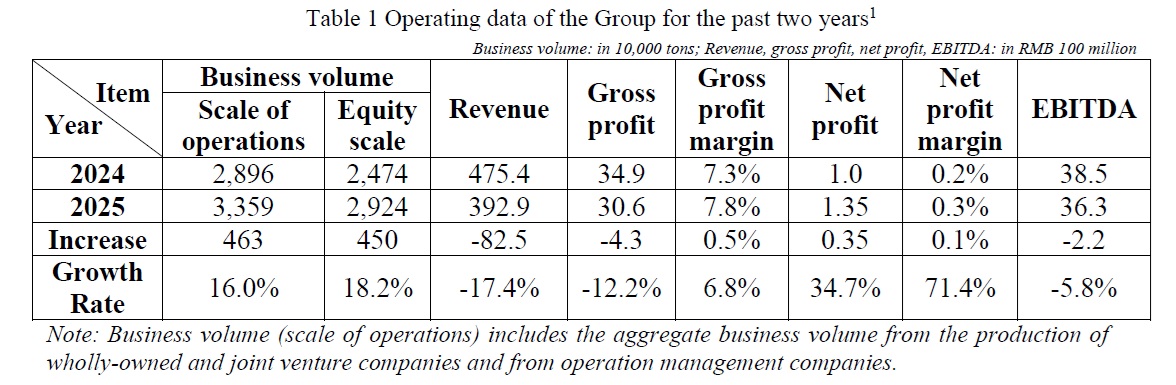
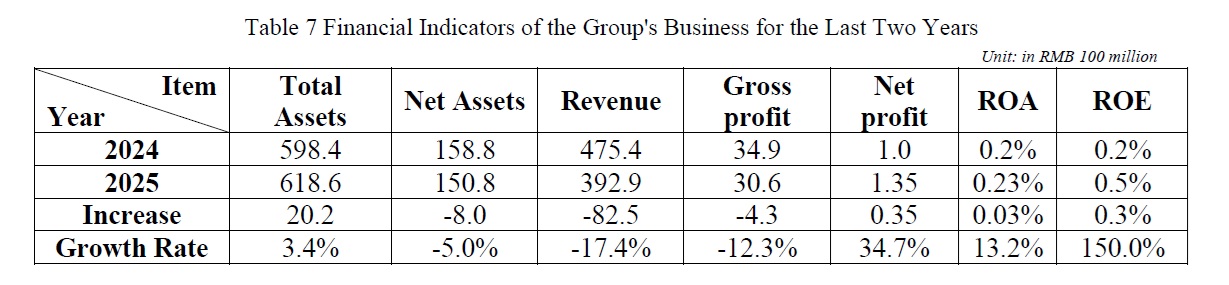
In 2025, Risun1 achieved revenue of RMB39.29 billion at the bottom of the industry cycle, maintaining a solid operating foundation against the backdrop of a general decline in product prices. Net profit was RMB135 million, a year-on-year increase of 34.7%; net profit attributable to owners of the parent was RMB58 million, a significant year-on-year increase of 188.1%, reflecting enhanced profitability; and net cash flow from operating activities reached RMB3.46 billion, a year-on-year increase of 141%, ensuring the stable operation of Risun.
1. Coke continues to lead the industry
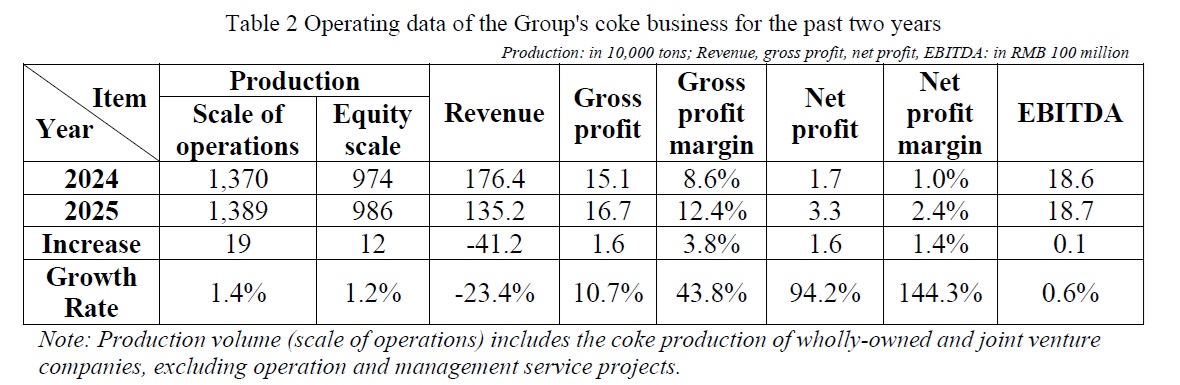
In 2025, the production volume of Risun's coke segment reached 13.89 million tons, representing an increase of 190,000 tons compared to 2024, or a year-on-year increase of 1.4%.
For the full year of 2025, coke prices underwent 27 adjustments: 15 were downward adjustments with a cumulative decrease of RMB845, and 12 were upward adjustments with a cumulative increase of RMB660. The year-end price decreased by a cumulative RMB185 compared to the beginning of the year, and the annual average price decreased by RMB547 compared to 2024, representing a decrease of 25%. Affected by the downward trend in coke prices, the total revenue of the segment decreased by RMB4.12 billion to RMB13.52 billion year-on-year, representing a decrease of 23.4%. Benefiting from lower coal blending costs and the effective reduction of expenses, the segment recorded growth in both gross profit and net profit.
2. Enhanced competitiveness of new chemical materials
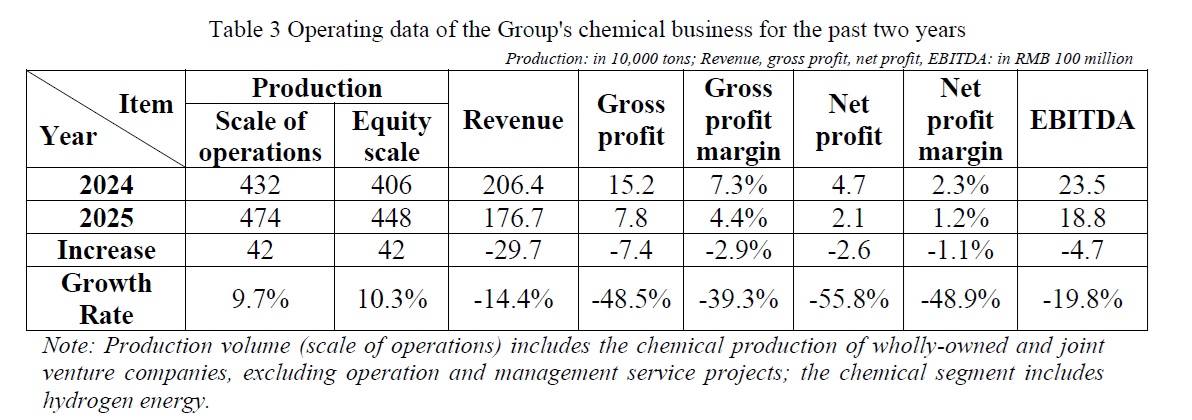
In 2025, the production volume of the Risun chemical segment reached 4.74 million tons, representing a year-on-year increase of 420,000 tons or 9.7% compared to 2024. Revenue reached RMB17.67 billion, a year-on-year decrease of RMB2.97 billion or 14.4%; gross profit was RMB0.78 billion, a year-on-year decrease of RMB0.74 billion or 48.5%. The decline in both revenue and gross profit was primarily because product prices decreased at a faster rate than raw material prices. Specifically: the price of caprolactam fell from RMB11,182/ton at the beginning of the year to RMB9,484/ton at the end of the year, a decrease of approximately 15%; pure benzene decreased from RMB7,553/ton at the beginning of the year to RMB5,216/ton at the end of the year, a decrease of approximately 31%; styrene dropped from RMB8,870/ton at the beginning of the year to RMB6,717/ton at the end of the year, a decrease of approximately 24%.
In 2025, Risun achieved breakthrough accomplishments in new chemical materials. The domestic first 5,000 tons/year amino alcohol project independently developed by Risun was successfully put into production in July 2025, breaking the foreign technological monopoly and making the company the second enterprise in the world with large-scale production capacity. After more than a decade of dedicated research, the Risun team has successfully developed the "technology for direct production of hexamethylenediamine from caprolactam", bypassing the adiponitrile stage in traditional processes, breaking foreign technological blockades, and forming a complete set of independent intellectual property rights. This marks an important milestone for Risun's entry into the field of new chemical materials, and also demonstrates that Risun's independent research and development capabilities have reached a new level.
3. Continued Growth in Operation and Management Profitability
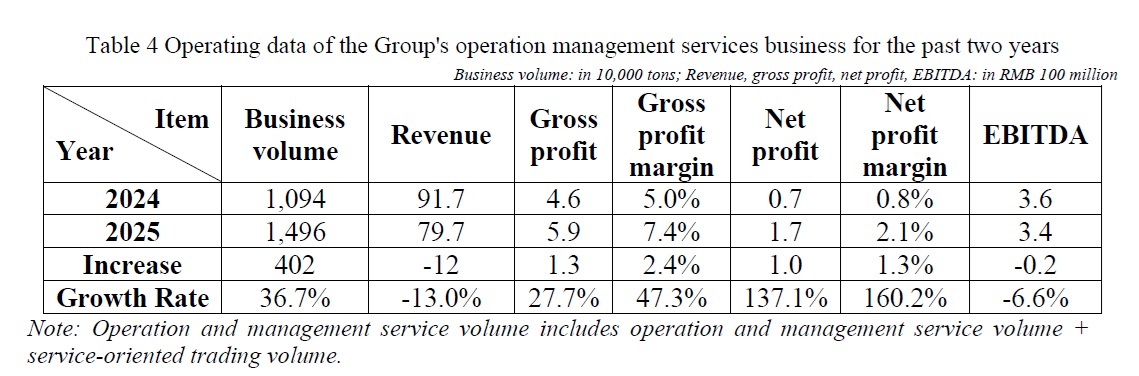
In 2025, the volume of the operation and management services business reached 14.96 million tons, an increase of 4.02 million tons or 36.7% compared to 2024. Due to the exit from certain operation and management projects, revenue decreased by RMB1.2 billion year-on-year, representing a decrease of 13%, but net profit increased by RMB100 million, representing an increase of 137.1%, reflecting a comprehensive upgrade in the profitability of Risun's operation and management services.
New projects in 2025 include the Jilin 1.2 million tons of coke (with 72,000 tons of LNG) project, the Shanxi 1.4 million tons of coke project, and the Shanxi 1.1 million tons of coke (with 60,000 tons of magnesium metal and 2 million tons of dolomite mine) project.
Risun's operation and management services have formed a continuous and stable profit model, with a profit per ton of product of RMB20-30/ton, and currently possess a scale with an annualised profit contribution exceeding RMB200 million. Operation management services have become another channel for Risun's business expansion and profit growth following chemicals and coke.
4. Continuous growth of hydrogen energy business
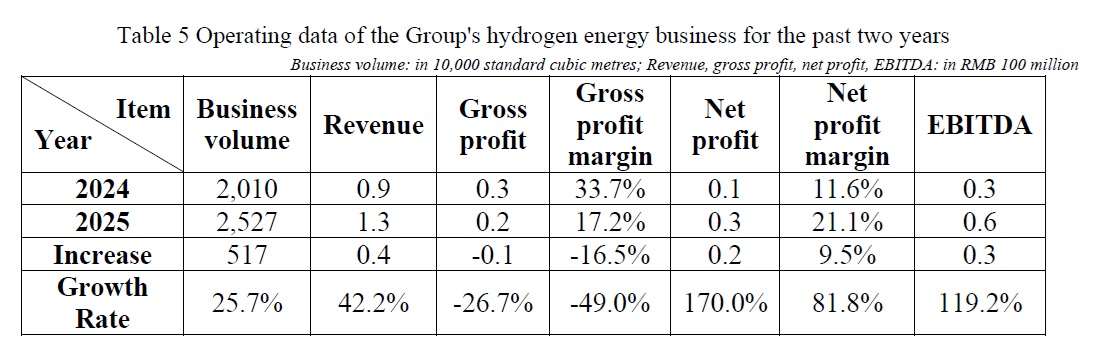
The sales volume of hydrogen for the full year of 2025 was 25.27 million standard cubic metres, representing an increase of 5.17 million standard cubic metres or 25.7% as compared to 2024. Revenue from the hydrogen energy business was RMB130 million, representing a year-on-year increase of RMB40 million or 42.2%; net profit was RMB30 million, representing a year-on-year increase of RMB20 million or a significant increase of 170%.
In summary, in 2025, coke achieved a net profit of RMB330 million, chemicals RMB210 million, operation and management RMB170 million, and hydrogen energy RMB30 million. After deducting headquarters expenses of RMB600 million, the total net profit was RMB135 million, a year-on-year increase of RMB37 million compared to 2024. Despite a significant decrease in the profit of the chemical segment, the profits of the coke, operation and management, and hydrogen energy segments all increased. Meanwhile, the business scale continued to expand, further consolidating our leading position in the industry.
In 2025, Risun achieved a total asset scale of RMB61.86 billion, representing a year-on-year increase of 3.4%. Net assets decreased by RMB800 million in 2025 (comprising: payment of RMB680 million for equity and share repurchases, dividends of RMB225 million from the Group and its subsidiaries, and an exchange loss of RMB25 million, offset by a net profit contribution of RMB135 million).
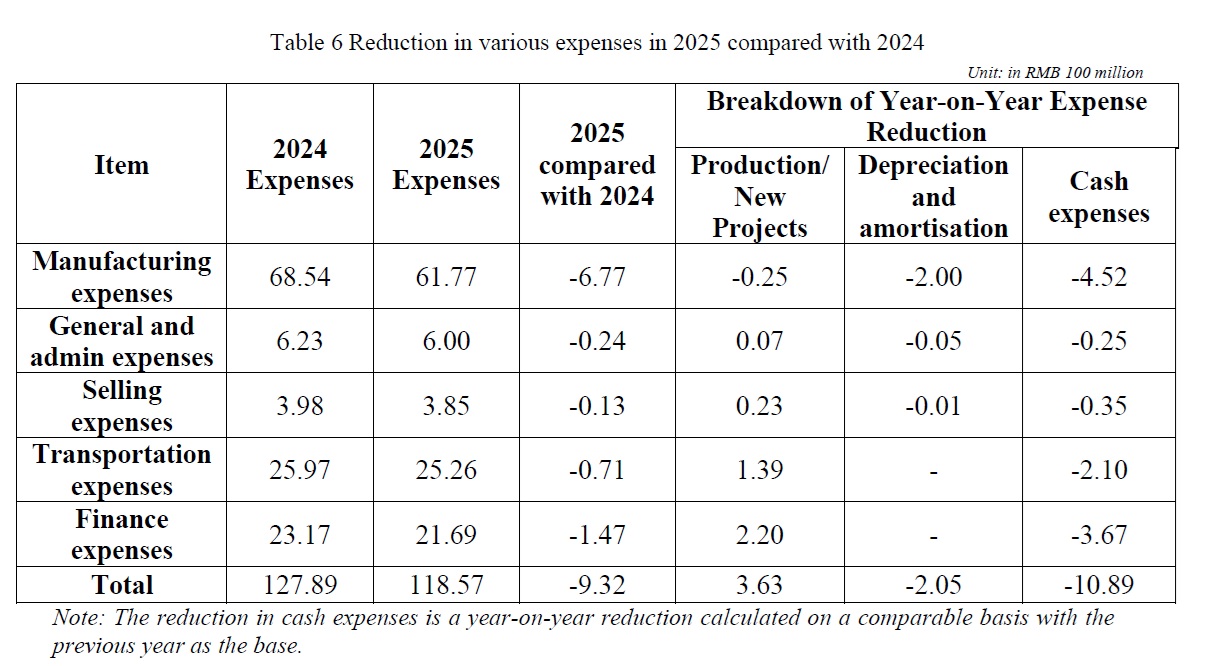
From 2021 to 2025, Risun continued to broaden its sources of income and reduce expenditures, as well as lower costs and enhance efficiency, completing a total of 64 technical transformation projects. Compared with the various expense indicators in 2020, the cumulative year-on-year expense reduction in 2025 was RMB2.14 billion; compared with the various expense indicators in 2024, the Group's cash expenses decreased by RMB1.09 billion, demonstrating Risun's strong operational resilience and cost control capabilities.
In 2025, only the steel industry had a slight recovery in profits across the coal-coke-steel industry chain, while profits in all other segments declined to varying degrees. While the coal chemical industry was mired in losses, Risun achieved a net profit of RMB135 million due to its strong overall competitiveness, once again demonstrating its powerful ability to pass through cycles and maintaining its absolute leading position in the industry.
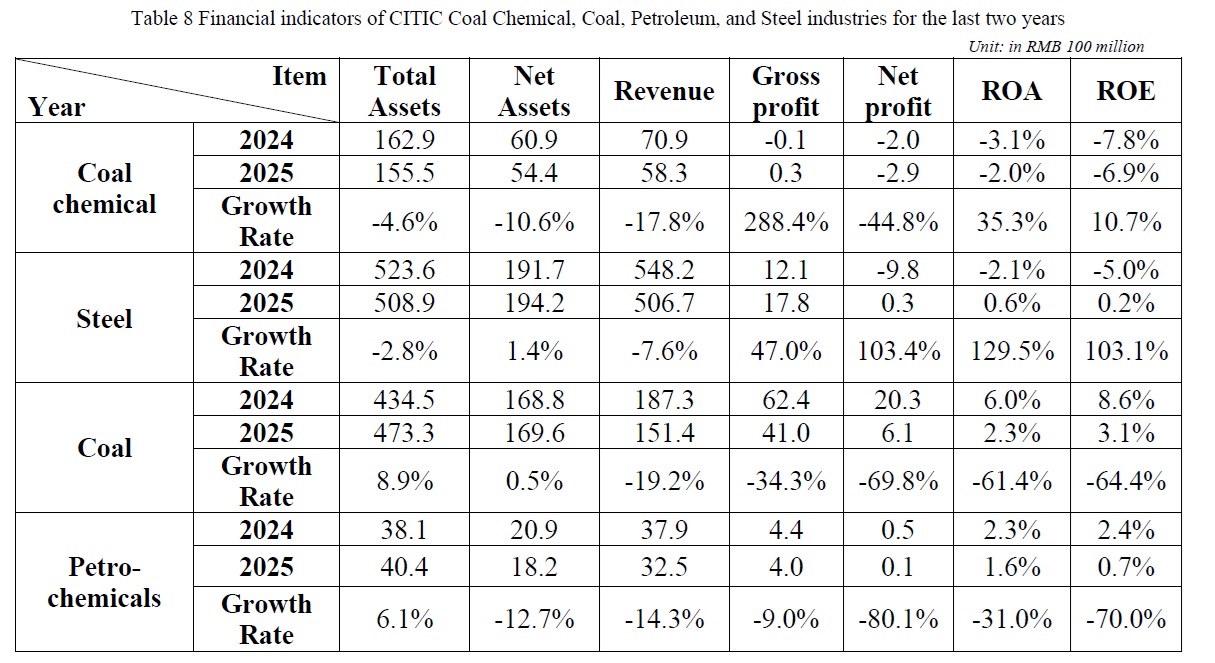
① CITIC Industry refers to the CITIC Securities Industry Classification Version 2.0.
② Data are from the Wind database; the data values in the table are derived from the medians of listed enterprises in various industries. The CITIC Coal Chemical Industry includes 10 companies; the CITIC Steel Industry includes 25 companies, the CITIC Coal Industry includes 27 companies, and the CITIC Petrochemical Industry includes 32 companies.
Entering 2026, market expectations for the chemical sector improved, and Risun received attention and continuous position increases from investors, leading to a rise in share price and active trading. On 12 March 2026, the trading volume exceeded 450 million shares, and the trading turnover exceeded HKD 1.51 billion, reaching a historical high and ranking fifth in terms of trading volume among all Hong Kong stocks on that day. From the beginning of 2026 to 30 April, the average daily turnover of Risun's shares in the secondary market reached HKD 143 million, and the average daily trading volume exceeded 43 million shares. The shareholding under Southbound Stock Connect continued to climb to 515 million shares, accounting for 11.55% of the total share capital and an increase of 177 million shares since the beginning of the year, representing a further step up in capital market activity.
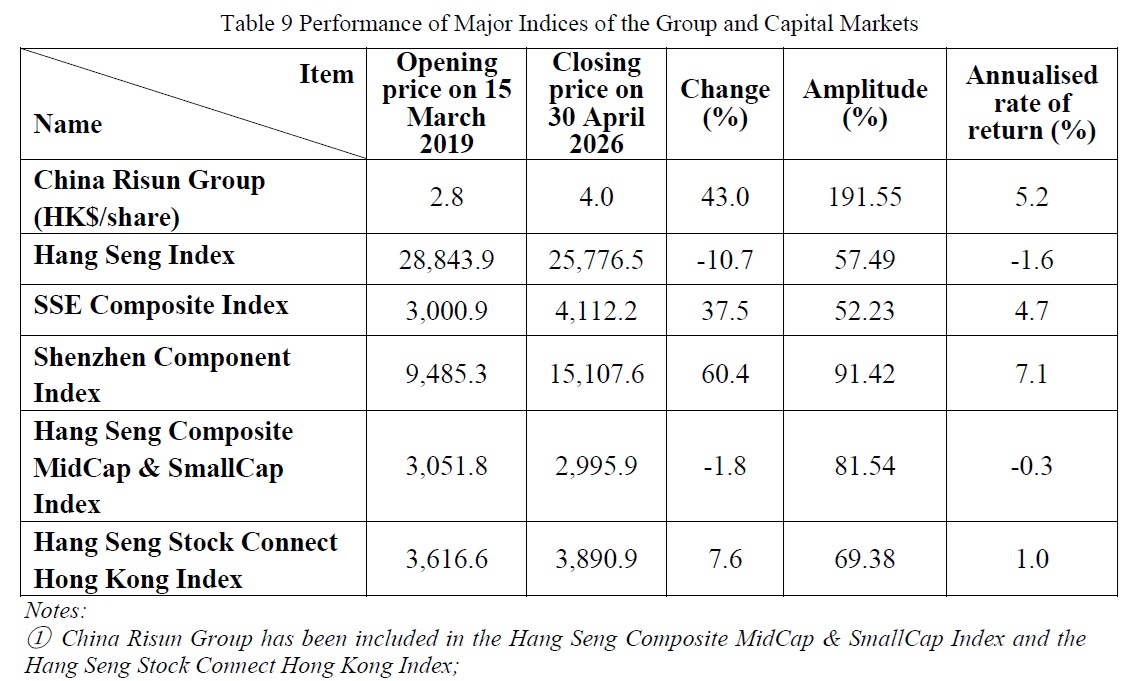
In terms of rewarding investors, despite the industry remaining in a downward cycle in 2025, the Company has nonetheless decided to allocate 30% of the net profit attributable to owners of the parent for 2025 to reward investors, totaling HKD 17 million, adhering to its commitment to bring continuous and stable returns to shareholders.
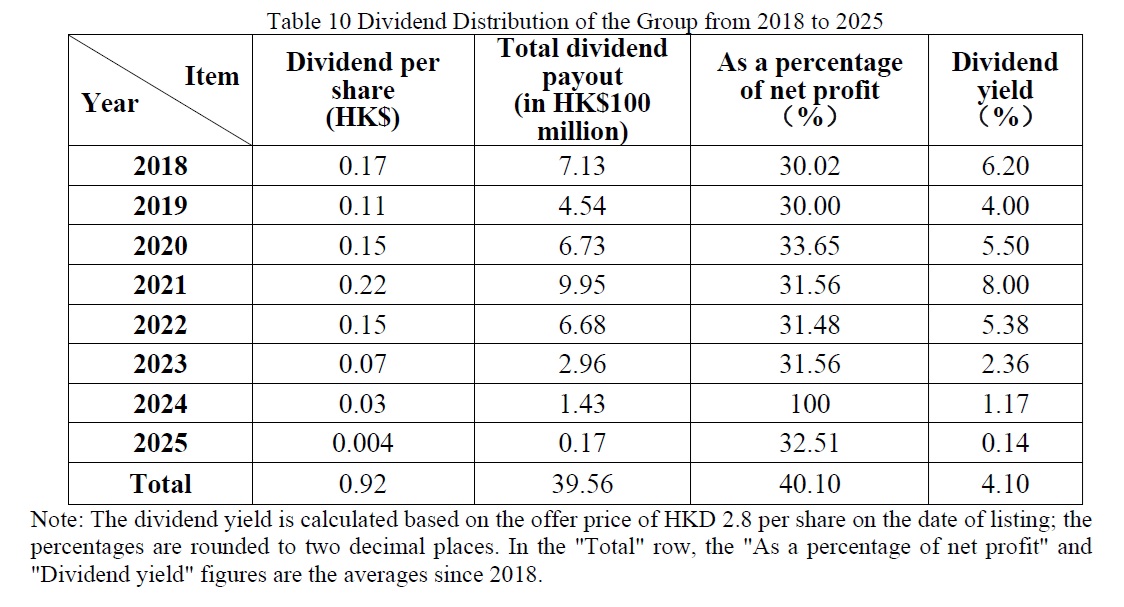
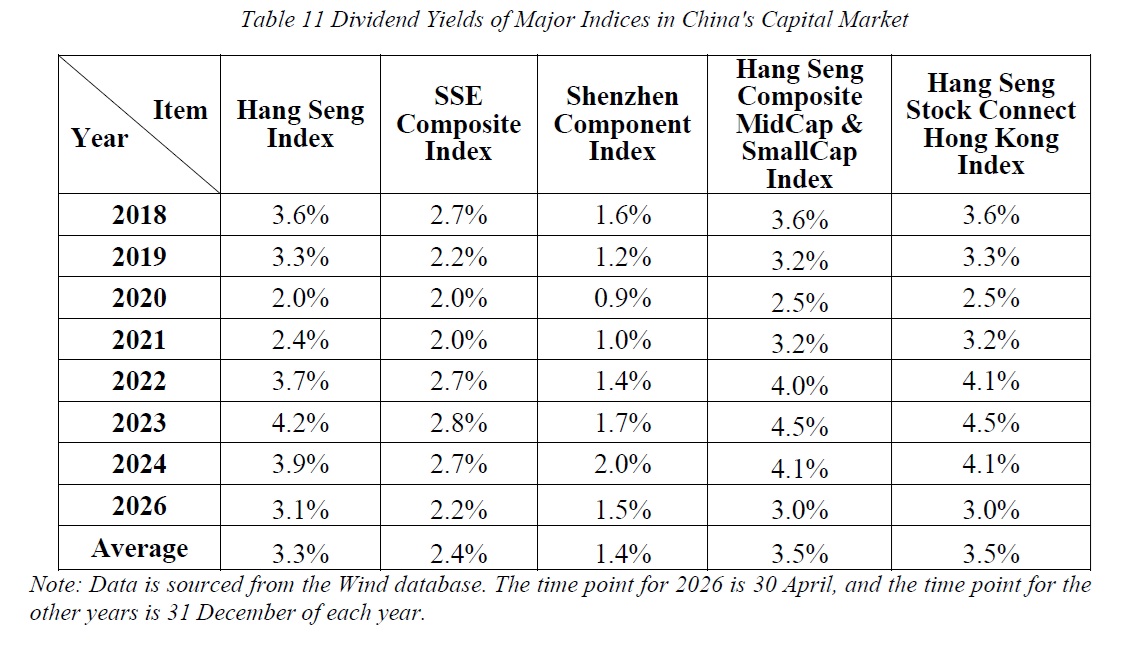
Since the industry entered a downward cycle, the value of Risun has been significantly undervalued, but the management is optimistic about the medium-to-long-term value of Risun. In order to safeguard the interests of the shareholders at large and convey positive signals to the market, the Company has increased its efforts in share repurchases since 2024. In 2024, there were 49 repurchases totaling 119 million shares for an amount of HKD 354 million; in 2025, there were 62 repurchases totaling 80 million shares for an amount of HKD 196 million. As at 31 December 2025, the cumulative number of shares repurchased was 228 million shares, with a cumulative amount of HKD 647 million.
On 29 April 2025, Risun issued an announcement proposing to launch a share incentive scheme. Announcements were subsequently published on 1 September 2025 and 22 January 2026, respectively, regarding the grant of a total of 14.418 million shares to 797 employees in two tranches, at the prices of HKD 2.41/share and HKD 2.28/share, respectively.
Risun's distribution mechanism, performance management system, and remuneration system are the core mechanisms of Risun's organisational operations. This share incentive scheme will help promote the sharing of interests between employees and the management, enhance the cohesion, execution, combat effectiveness, creativity, and competitiveness of Risun, and lay a solid foundation for the realisation of Risun's "community of shared interests, community of shared undertaking, and community of shared destiny".
As of 2025, various products in both the coke and chemical sectors have experienced continuous declines for four years, accelerating the intensity of market clearing within the industry. The industry has shown signs of bottoming out and rebounding, and the Group expects that total profit in 2026 will be significantly better than that in 2025.
Measures to secure revenue and profit growth for 2026:
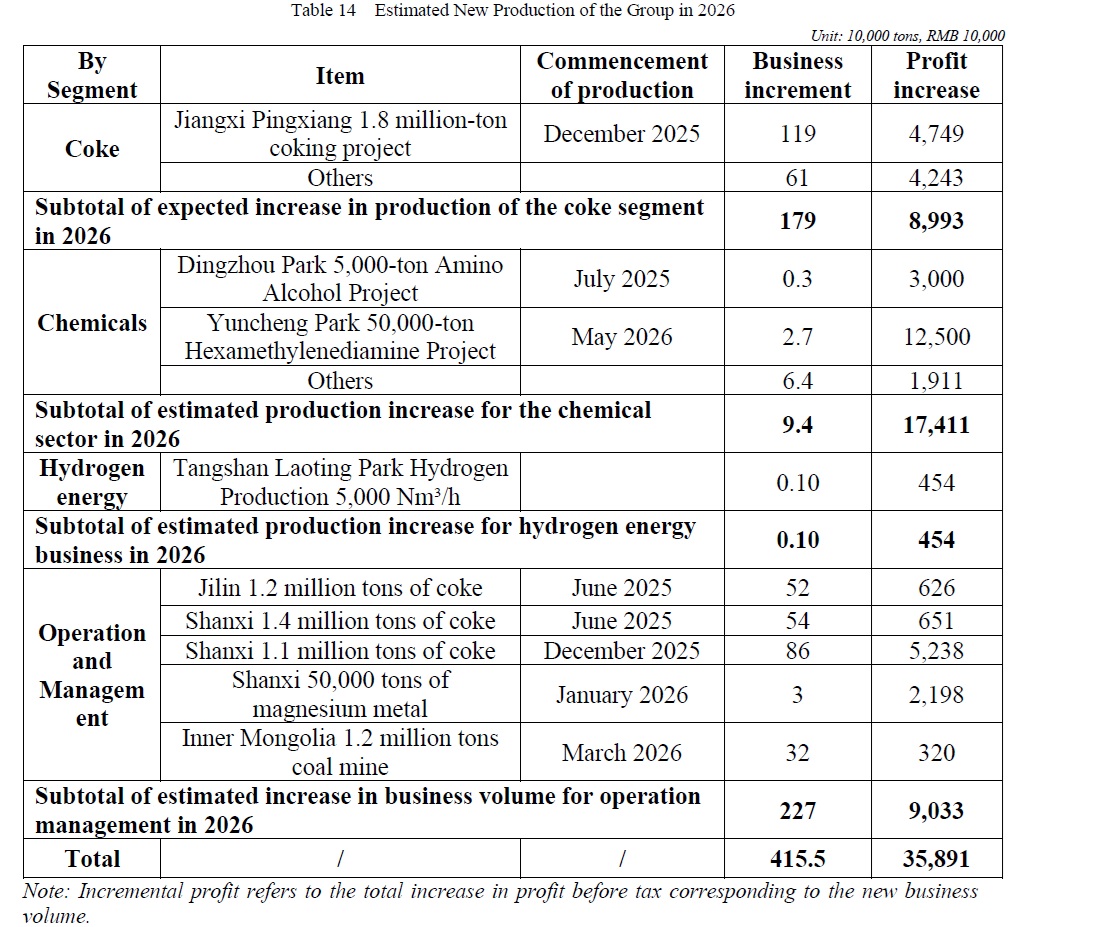
1. Profit increase from business growth and new projects: RMB359 million;
2. Profit increase from continuous cost reduction: RMB945 million;
3. Revenue increase from collections and tapping potential: RMB1 billion.
In 2026, the Group expects to achieve a total profit increase of RMB2.304 billion through business growth, new projects, continuous cost reduction, debt recovery, and tapping potential.
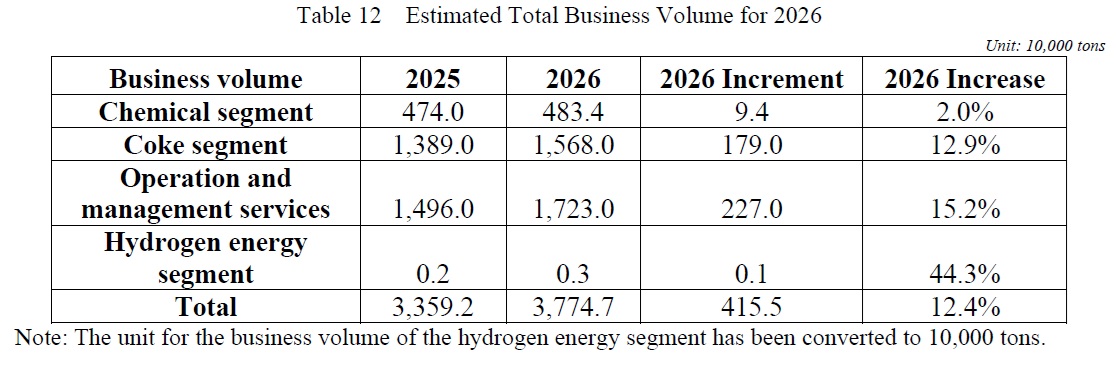
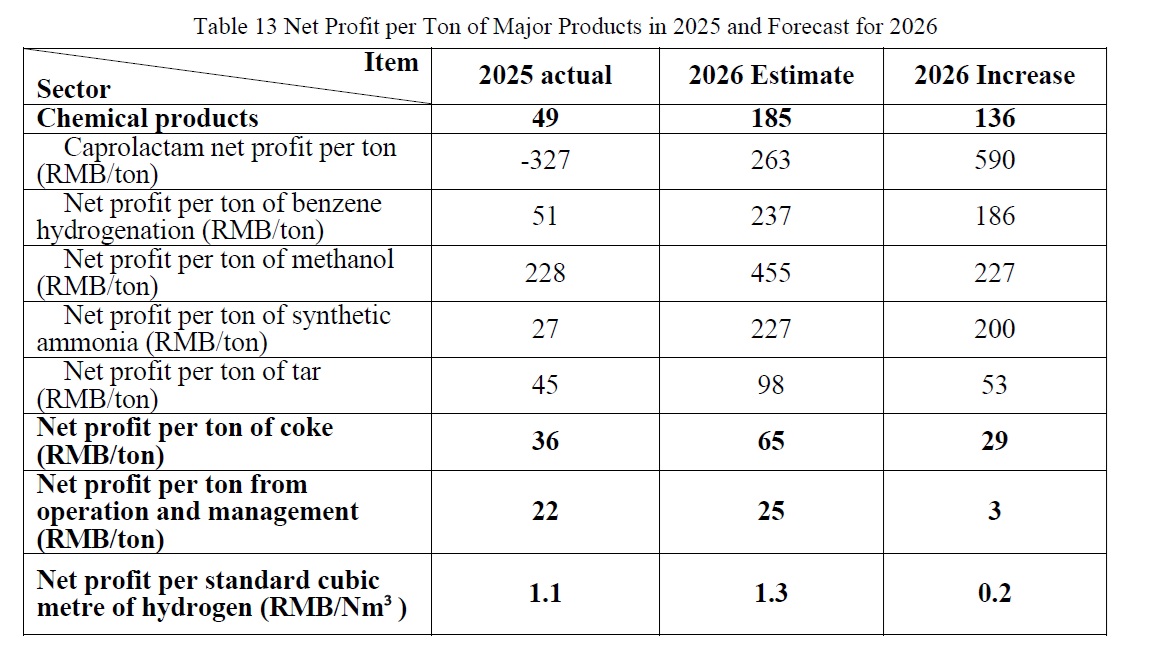
The schedule of estimated business volume and profit increase for new projects in 2026 is as follows.
Specific details regarding the growth in business volume and profit of the four segments, namely chemicals, coke, operation and management services, and hydrogen energy, are as follows:
1. Significant growth in profit from chemicals and new materials
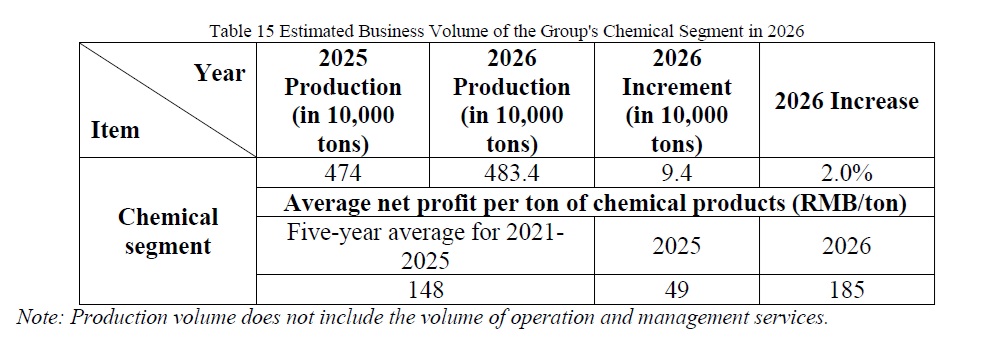
In 2026, the chemical sector will increase its business volume by 94,000 tons. The Dingzhou 5,000-ton amino alcohol project will increase business volume by 3,000 tons, the Yuncheng Park 50,000-ton/year hexamethylenediamine project will increase business volume by 27,000 tons, and other chemical projects will increase business volume by 64,000 tons.
The chemical sector will experience a cyclical reversal in 2026, which will directly bolster the profits of Risun. The comprehensive net profit per ton for chemical products in 2026 is expected to reach RMB185/ton, representing an increase of 277.6% compared to RMB49/ton in 2025. Among these, the ex-factory prices of methanol and synthetic ammonia will reach RMB2,600/ton and RMB2,450/ton, representing year-on-year increases of 15.1% and 11.5% respectively compared to 2025. These price increases will directly boost Risun's profit.
With the help of "anti-involution" measures, the profitability of the caprolactam industry is gradually recovering. The price spread is expected to reach RMB1,700/ton in 2026, a year-on-year increase of 66.2% compared to 2025. Overall, the chemical sector will achieve a leap from bottoming out to sustained growth, providing strong support for the attainment of Risun's 2026 operational targets.
2. Bottoming out and reversal of the coke segment
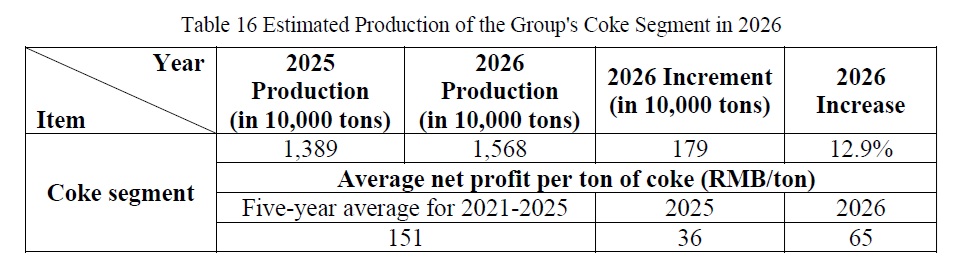
In 2026, the business volume of Risun's coke segment will increase by 1.79 million tons. Among which, the Jiangxi Pingxiang Park is a newly built capacity, which is expected to increase the business volume by 1.19 million tons. Upon full commencement of production, the project will effectively bridge the structural gap in the coke market in Jiangxi and the entire East China region, and improve the regional industrial chain supply system. Other coking plants contributed an increase of 610,000 tons.
In 2025, the coke industry was in a downward cycle; however, through measures such as optimising production processes, improving production efficiency, and reducing transportation costs, Risun achieved a net profit per ton of coke of RMB36/ton, far exceeding the industry average. In terms of price performance, coke and coal basically bottomed out in June 2025. With the recovery of industry prosperity, the net profit per ton of coke in 2026 is expected to be no less than RMB65/ton.
In the field of international business, the operations of Risun's Indonesia Industrial Park not only cover the Southeast Asian region but also extend to places such as Brazil and Turkey. With the adjustment of India's coke quota policy, coupled with the exit of certain coke producers from the international market, the Indonesia industrial park business will maintain steady growth in 2026.
3. Operation and Management Achieves Growth in Both Volume and Profit
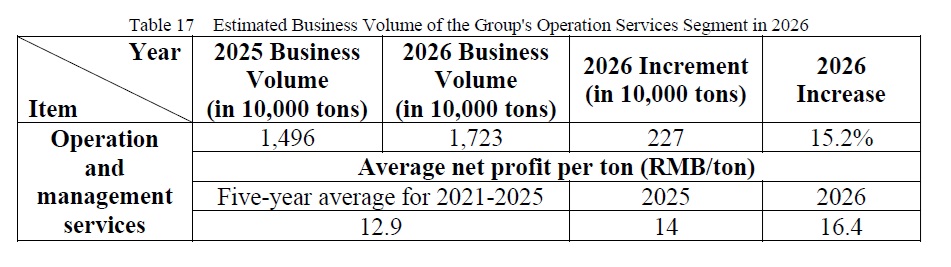
In 2026, the scale of operation and management services will continue to expand, with an expected increase in business volume of 2.27 million tons, including a new 50,000-ton magnesium metal project and a 1.2 million-ton coal washing and processing project. This signifies that Risun's operation and management services now possess the capability to expand into other industries, laying a solid foundation for broadening related diversified operation and management services.
The operation and management model is not only a profit growth point for Risun, but also a primary means for Risun to expand its market share, and furthermore, a preliminary step for mergers and acquisitions. Through operation and management services, the control over the business of the target companies is deepened, while risks such as insufficient or incomplete due diligence can be effectively avoided, and post-merger integration issues can be resolved in advance, so as to achieve industry consolidation in an asset-light manner and promote the transformation of Risun towards service-oriented manufacturing.
4. Commissioning of the first domestic 5-ton/day liquid hydrogen plant
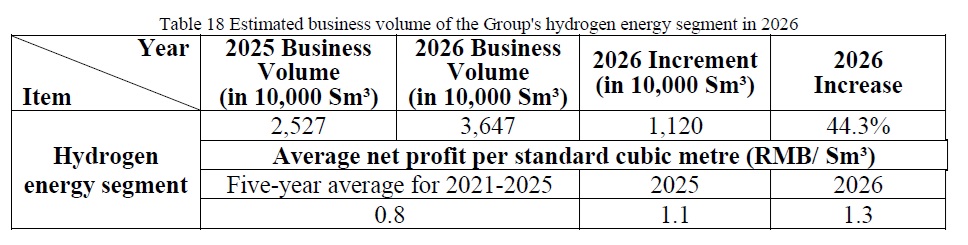
In 2026, the business volume of Risun's hydrogen energy segment is expected to reach 36.47 million standard cubic metres, an increase of 44.3%.In 2026, centering on relevant policies and hydrogen energy development plans, Risun will actively build relevant application scenarios based on liquid hydrogen.
Risun's first domestic 5-ton/day liquid hydrogen project is expected to commence production in May 2026; we will actively explore liquid hydrogen application scenarios and expand into new areas of the hydrogen energy business.
On the one hand, utilising market channels and brand influence to expand the layout of hydrogen refuelling stations, promote hydrogen energy products and technical services, and increase market share; on the other hand, constructing a full-scenario application system, building a zero-carbon logistics and transportation platform, integrating hydrogen energy supply and logistics transportation resources, and achieving decarbonization in the logistics and transportation segment through hydrogen-powered heavy-duty trucks; simultaneously planning natural gas hydrogen blending projects; advancing the layout of the green hydrogen industry, and constructing emerging scenarios such as hydrogen chemicals and hydrogen power generation.
Compared to the actual expenses in 2025, the target for 2026 is to further reduce cash costs by RMB945 million, of which: manufacturing expenses will be reduced by RMB270 million, selling expenses by RMB46 million, transportation expenses by RMB247 million, administrative expenses by RMB74 million, and finance costs (rate) by RMB308 million.
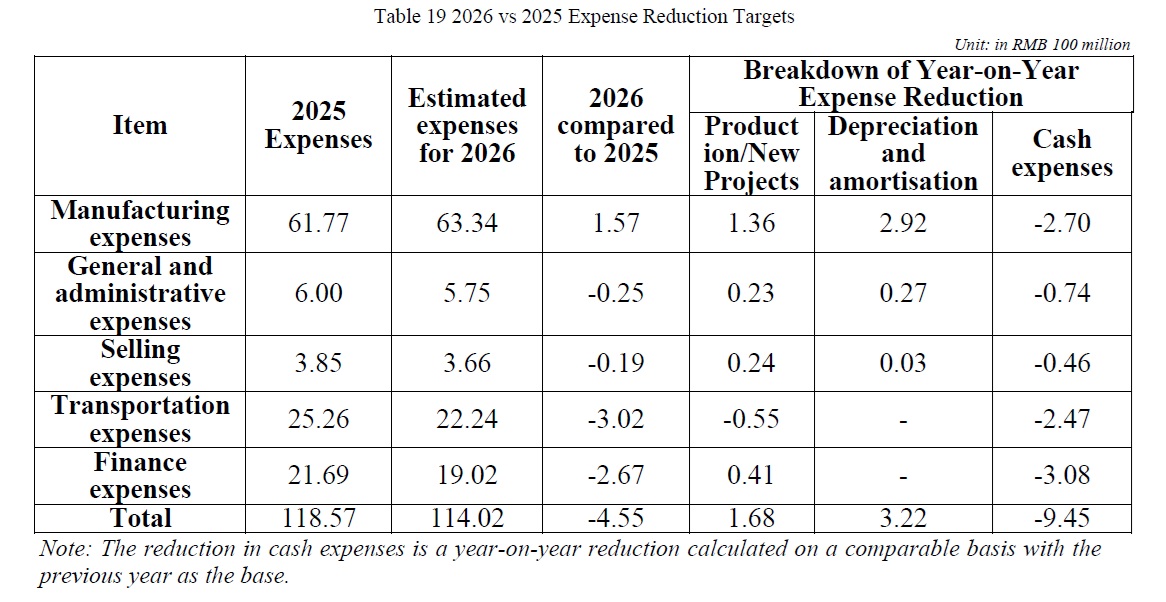
1. Manufacturing expenses: RMB270 million
Improve quality and efficiency through the implementation of measures such as technological transformation and comprehensive energy utilisation. For example: Cangzhou Risun achieved a full-year cost reduction of RMB90 million in energy and material consumption through technical transformation projects such as the hydrogenation catalyst interception project and steam recovery; Dongming Risun is expected to achieve a full-year cost reduction of RMB78 million through technical transformation projects such as the renovation of the rectification system of the hydrated cyclohexanone unit and the low-temperature recovery of the drying and absorption section of the sulfuric acid unit; Yuncheng Risun is expected to achieve a full-year cost reduction of RMB28 million through refined operations, stipulating usage cycles and dosages, reducing the unit consumption of machinery and materials, and increasing the boiler load of the thermal power workshop to reduce steam costs, etc.
2. Selling expenses: RMB46 million
The main automation systems improved on-site loading and unloading efficiency, reducing railway operating expenses such as demurrage and leasing fees by RMB40 million.
3. Transportation expenses: RMB247 million
Adjusted the logistics and transportation structure, increased the proportion of rail and sea transport, improved the proportion of two-way return trips for road transport, and comprehensively utilised multimodal transport models, reducing logistics expenses by RMB90 million.
In terms of rail transport, the Group secured "all-in rates" from the Railway Bureau by entering into mutual guarantee agreements, enjoying freight discounts of over RMB150 million per year.
In terms of road transport, the Group continued to promote automation and informatization measures, implemented the "Smart Logistics" management system, and advanced control models such as "Fast-In, Fast-Out" and "Green Channel" to achieve comprehensive and full-link efficient control of in-plant logistics, reducing transportation expenses by RMB7 million.
4. Administrative expenses: RMB74 million
Implement multiple measures to enhance management efficiency and reduce management costs, such as: centralised procurement of materials plus standardised payment; zero-inventory management of spare parts; downsizing the company, shrinking hierarchies, and merging departments, while utilising the extensive application of digitalization and intelligence as a means to improve per capita labour efficiency indicators.
5. Finance costs: RMB308 million
The Group continues to optimise its financing structure and cost rates, aiming for a further 1% reduction in the comprehensive financing cost in 2026 based on the 2025 level; it will strengthen cooperation with head offices, focus on promoting equity cooperation, and implement the replacement of high-cost overseas financing in a planned manner; In terms of fund management fees, strictly control the quality and scale of bills, strictly control the scale and rates of discounting, and strictly control the margin ratios and deposit yields; increase fund operations and reasonably utilise various financial instruments of banking financial institutions.
In 2026, while reducing costs and enhancing efficiency through various channels, the Group will also reduce total liabilities. Under the premise of controlling the total debt scale to ensure no growth, the debt structure will be adjusted, including internal and external structures, long-term and short-term debt structures, and the structure of project liabilities and working capital liabilities, so as to systematically reduce financing costs. First is to enhance profitability and increase operating cash flow; second is to expand equity financing and increase capital; third is to control investment and maintain a reasonable investment scale, with the upper limit not exceeding its own operating cash flow. The gearing ratio is expected to be reduced to within 70% by the end of 2026.
In 2026, the "Guiding Opinions on the Reform of Operation and Management of Risun Group" shall be fully implemented. With digitalization and intelligence as the primary focus, the annual operating policy of "increasing efficiency, reducing costs, and securing profits" shall continue to be implemented. Efforts shall be made to vigorously recover various arrears, expand revenue, systematically reduce various costs and expenses, improve labour efficiency, and comprehensively enhance operation and management capabilities to ensure the achievement of the annual profit target.
1. External collections to increase revenue by RMB700 million
The 2026 plan is to complete the collection of RMB300 million in government arrears, RMB200 million in customer arrears, receive RMB100 million in government rewards, and benefit from RMB100 million in tax policy reductions and exemptions.
2. Internal potential tapping to increase revenue by RMB300 million
(1) Production increase: RMB62 million. Through measures such as high and stable production of the units, Class A environmental protection enterprise status, standby dry quenching, and increased operation management.
(2) Spread expansion: RMB153 million.
① Comprehensive yield rate increased to 101.5%, increasing revenue by RMB67 million;
② Large mine loss rate reduced by 10%, expanding the price spread by RMB13 million;
③ Price spread expanded by RMB48 million through inventory management of raw materials and products;
④ Customer structure adjusted towards high-yield customers, expanding the price spread by RMB25 million.
(3) Revenue creation: RMB85 million.
① Expanded factory trade by 1.2 million tons, increasing revenue by RMB65 million;
② Revitalised idle assets, generating RMB20 million.
The past five years have been a very important five-year period in the history of Risun's development, as well as the five years with the largest investment and the fastest development in the history of Risun's development. Reviewing the history of the formulation and implementation of the five-year plan goals not only reveals the general trajectory of Risun since its inception, but also allows for the exploration of the fundamental laws of the Company's development. In particular, by benchmarking against outstanding companies and macroeconomic developments and then conducting summaries and reviews against ourselves, we can draw valuable experience from the historical development process of the formulation and implementation of the five-year plan goals, thereby guiding future development more scientifically.
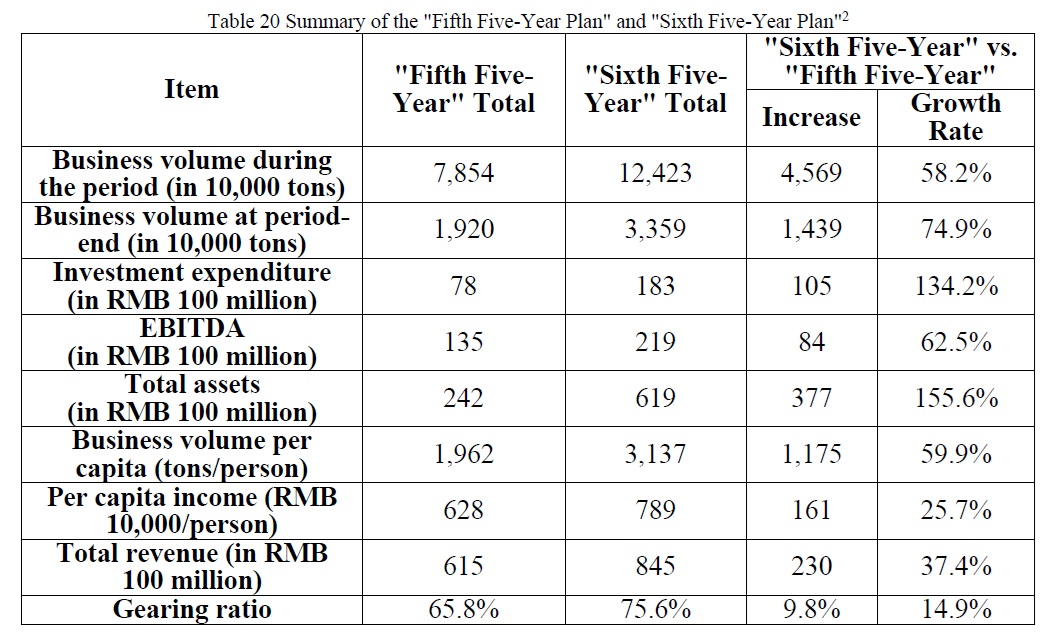
From 2021 to 2025, the period of Risun's "Sixth Five-Year" Plan was the five years with the largest investment and fastest development for Risun. The number of industrial parks increased from seven to nine, expanding the business overseas for the first time, and the scale of the coke and chemical businesses increased significantly. During the period, business volume increased by 45.69 million tons, an increase of 58.2%; total assets grew from RMB24.2 billion to RMB61.9 billion, an increase of 155.6%, with significant expansion in scale; cumulative EBITDA reached RMB21.9 billion, an increase of RMB8.4 billion compared to the "Fifth Five-Year" period, a rise of 62.5%, with profitability levels improving steadily; cumulative investment expenditure was RMB18.3 billion, an increase of RMB10.5 billion compared to the "Fifth Five-Year" period, a rise of 134.2%, which greatly broadened Risun's business layout and industrial space.
The Group's total investment during the "Sixth Five-Year Plan" period exceeded the total investment of Risun over the twenty-five years from its founding to the end of the "Fifth Five-Year Plan"; in terms of spatial distribution, it expanded from Northern China to Southern China, and from China to Indonesia; in terms of the industrial chain, it extended from coke to coal chemicals, then to petrochemicals, and further to new materials and new energy. The scale of industrial parks, asset scale, production scale, revenue scale, and EBITDA scale have increased significantly, which has greatly expanded Risun's industrial space, broadened the width of Risun's industrial chain, enriched the thickness of Risun's industrial chain, and extended the length of Risun's industrial chain.
It has enriched and enhanced Risun's corporate growth logic and methodology of "specialisation, refinement, strengthening, and expansion", and successfully implemented the Group's "Three-Multi" development strategy of "multi-mode growth, multi-industry development, and multi-regional layout", laying a solid material and spiritual foundation for the Group's development towards a scale of hundred billion, with greater sustainability, stability, and longevity.
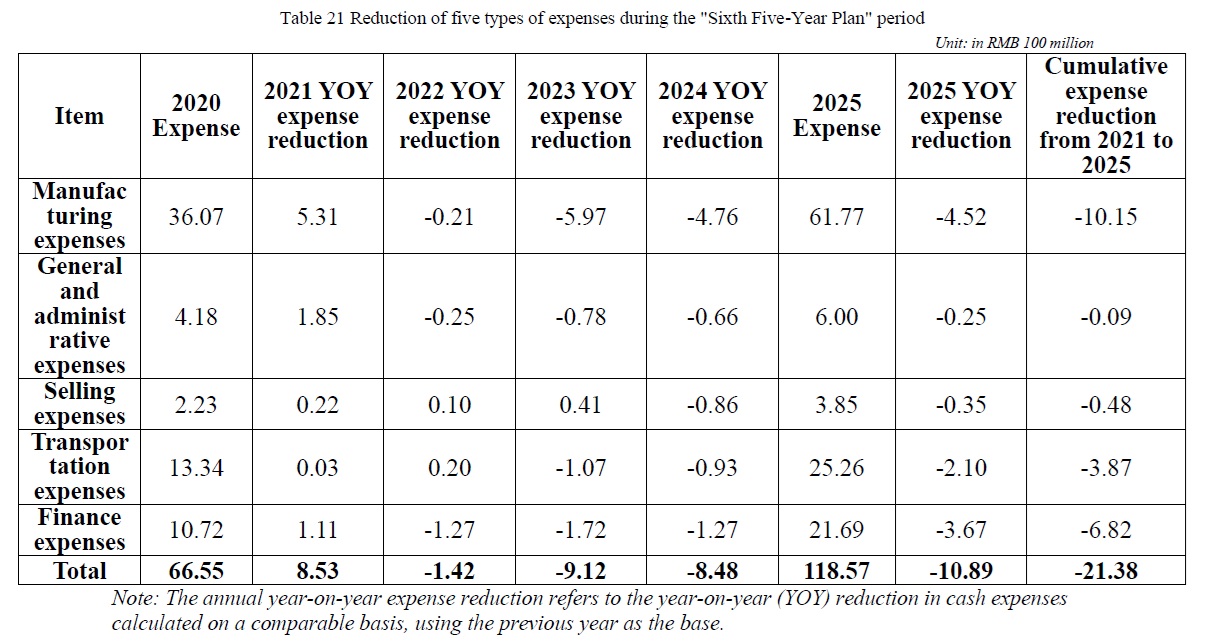
During the "Sixth Five-Year Plan" period, the Group's five major expenses decreased by a cumulative RMB2.138 billion year-on-year, primarily through the following measures:
1. Manufacturing overheads decreased by a cumulative amount of RMB1.015 billion, primarily through various methods such as capacity expansion and renovation, technological innovation, energy balance, automation, and informatization to significantly reduce manufacturing overheads.
(1) Reducing costs through capacity expansion: After the commissioning of the Phase II benzene hydrogenation unit of Tangshan Risun, the manufacturing cost per ton was RMB193, a decrease of RMB218 per ton compared to before the upgrade, resulting in an annual cost reduction of over RMB100 million. After the commissioning of the Phase II caprolactam project of Cangzhou Risun, the production cost per ton decreased by over RMB1,800, of which the manufacturing cost per ton was RMB357, a decrease of RMB190 per ton compared to before the upgrade, resulting in an annual cost reduction of over RMB90 million.
(2) Reducing costs through technological innovation: The expansion and transformation of the temporary grid-connexion line for the steam turbine of the Cangzhou caprolactam unit increased self-generated electricity by 9,146 kW/hour, resulting in annual electricity cost savings of RMB32.26 million.
(3) Reducing costs through energy balance and comprehensive utilisation: For example, self-generated electricity reached 2.4 billion kWh in 2025, with the self-power supply ratio reaching 56.7%, an increase of 2.3% compared to 2024, resulting in cost savings exceeding RMB40 million/year;
2. Finance costs decreased by RMB682 million
The Group continued to optimise its financing structure and cost rates, strictly implementing the financing cost control requirements of "existing financing interest rates - must decrease upon renewal; new financing interest rates - decrease only and no increase; and replacement financing interest rates - better and lower".
In terms of adjusting the structure, head-to-head cooperation agreements have been entered into with various banks and financial institutions to provide all-round support for the Group's financing and cost reduction. In terms of equity financing, a total of RMB6.05 billion in long-term capital has been introduced since the listing in 2019. The Group's consolidated financing cost rate decreased to 4.1% in 2025, a decrease of 2.5 percentage points from 2020, representing a reduction of 38%.
3. Total selling expenses and transportation expenses decreased by RMB435 million
In terms of the control of selling expenses and transportation expenses, the Company mainly implemented the "Smart Logistics" management system through automation and information technology means, and promoted control models such as "Fast-In, Fast-Out" and "Green Channel", so as to achieve comprehensive and full-link efficient control of in-plant logistics.
During the "Sixth Five-Year Plan" period, the overall "in-and-out" time for coal coking motor transport vehicles was shortened by more than 400 minutes, representing a 50% efficiency improvement; the round-trip turnover time for motor transport to customers was compressed to 2-3 days, representing a 50% efficiency improvement. The enhancement in logistics turnover efficiency significantly reduced freight rates while simultaneously increasing earnings for transport customers.
In terms of railway transportation, the Group secured "all-in rates" from the Railway Bureau by entering into mutual guarantee agreements, enjoying freight discounts exceeding RMB350 million.
In terms of transport customer management, implementing precise price reductions through various measures such as optimising customer structure, standardising freight payments, utilising online bidding platforms, and conducting normalised inspections by all staff to identify single-route transport costs.
4. Administrative expenses decreased by RMB0.09 billion
The Group issued the "Guiding Opinions on the Reform of Operation and Management of Risun Group" in 2024, setting out specific requirements for operational management transformation across 24 aspects to guide daily operations and management.
Over the past five years, multiple measures have been taken to enhance management efficiency and reduce management costs, such as: enhancing internal operational efficiency to reduce railway operating expenses like demurrage and leasing fees; centralised procurement of materials plus standardised payment, which strengthened transparent procurement; zero-inventory management of spare parts, reducing capital tied up in various materials by 50%; implementing a system where mid-to-high-level cadres lead shifts on the front line, and cadres and employees go to the production front line to eliminate leaks and losses, reduce costs, and enhance profitability; and downsizing the company, shrinking hierarchies, and merging departments, using the wide application of digitalization and intelligence as a means to improve labour productivity indicators per capita.
The Group implements effective and robust control over investment costs, five categories of expenses (production expenses, administrative expenses, finance expenses, selling expenses, and research and development expenses), and two categories of costs (labour costs and tax costs). Such extreme cost control capability, on the surface, reduces investment costs and enhances profitability; however, in essence, it enhances the comprehensive competitiveness of Risun, forcing a comprehensive, systematic, and continuous improvement in efficiency and capability across Risun's decision-making, operation, and business management. While expanding business boundaries and space, it has not diluted business management capabilities, but has further broadened and deepened Risun's moat, becoming Risun's most essential and core capability, as well as the core capability that enables Risun to navigate through various cycles.
Risun is an entrepreneurial organisation with lofty ideals and ambitious goals, characterised by a high degree of consciousness and extreme self-discipline. Risun realises this ideal through industrial development and business expansion, ensuring the continuous achievement of its ambitious goals through long-term, sustained, and continuous struggle day after day and year after year. Since its inception, Risun has continuously conducted extensive and in-depth research on the market, industry, and industrial sector, including comparative studies of renowned domestic and international companies. These studies have enabled Risun to progressively establish its business model, development model, operational model, and management model, and have gradually solidified Risun's unique model for survival and development.
1. Since its inception in 1995, Risun has gradually established its long-term goals and annual, monthly, and daily plans, which were later changed to five-year, two-year, annual, monthly, and daily plans. During Risun’s "Fourth Five-Year" Plan (2011–2015), the two-year plan was removed and replaced with a ten-year development outline. This resulted in the current structure of daily, monthly, and annual plans, a five-year plan, and a ten-year development outline, which is still known as the "Five Unifications" of strategic management, embodying the principle that "one day is as ten years, and ten years are as one day."
2. Corresponding to the five unifications of strategic management is the trilogy of strategic implementation: always having businesses in normal operation, always having businesses for investment and M&A, and always having businesses for research and R&D. The "Five Unifications" of strategic management grasp strategic planning from a temporal dimension, while the "Trilogy" of strategic implementation controls strategic implementation from a spatial dimension. The two complement each other, jointly managing the survival and development of Risun from both temporal and spatial perspectives.
3. Risun has gradually established its mission and vision during its entrepreneurial process: A world-leading energy and chemical company—innovation leads the future. This was gradually derived from Risun's entrepreneurial tenet of "Creating Wealth and Perfecting Life" and its entrepreneurial ideal of "Contributing the Greatest Strength to Social Progress"; it follows the Risun tenet and carries the Risun ideal.
4. In 2025, marking the 30th anniversary of Risun's entrepreneurship, we formulated the long-term goals of "Risun's Next Thirty Years" based on the Group's mission and vision, to unify thoughts and inspire everyone for long-term endeavours.
5. In the second half of 2025, as Risun's sixth five-year plan approaches its conclusion, and on the basis of summarising the successes and failures, experiences and lessons of the "Sixth Five-Year" plan, the Group has formulated the development outline for the next ten years (2026-2035) and the seventh five-year development plan (2026-2030) in accordance with the long-term goals of "Risun's Next Thirty Years".
6. Risun’s formulation of the "Five Unifications" of strategic management and the "Trilogy" of strategic implementation is practical and adapted to local conditions; it is a process of mutual comparison, mutual research, and repeated deduction; it is a process from top to bottom, bottom to top, inside to outside, and outside to inside; and it is a process that highly unifies the summary of data induction, the summary of lessons learned, and future planning.
7. Risun's five-year plan is a process of seamless and invisible integration between the near and the distant. It is a comprehensive plan fully implemented across specific business operations, organisation, financial data, and investment and financing, possessing the same high degree of operability and executability as an annual plan.
8. The implementation of the ten-year outline and the five-year plan can enable the Group to be more correct in its direction, more firm in its path, more persistent in its strategy, and more flexible in its tactics.
9. The formulation and implementation of the ten-year outline and five-year plan enable the Group to be highly unified and consistent in its decision-making, execution, assessment, and supervision operating mechanisms, ensuring consistency between upper and lower levels as well as internal and external consistency, making the organisation more efficient, making the daily work of every individual more meaningful, and making the visionary goals more operable and achievable.
10. The formulation and implementation of the ten-year outline and five-year plan enable the Group to unify strategy and tactics, survival and development, direction and path, objectives and methods, macro and micro, and short-term and long-term, which can likewise achieve the unification of logic and essence, cognition and practise, and values and methodology.
This method of unifying theory with practise, ideals with reality, and individuals with the organisation is one of the many methods used during Risun's entrepreneurial process. It ensures that Risun always stays on the right path, maintaining an entrepreneurial, creative, and innovative posture and mindset, striving continuously, for the long term, and incessantly, struggling to the end and never stopping.
On the basis of an in-depth summary of the experience and lessons learned from Risun's "Sixth Five-Year Plan" and the past thirty years of entrepreneurship, we recognise that the downturn in the industry cycle is not a short-term fluctuation, but rather the beginning of a long-term adjustment following the peaking of China's industrialization and urbanisation processes. In the face of this fundamental change, Risun has formulated a new ten-year development outline and the "Seventh Five-Year" plan, unwaveringly transforming towards service-oriented manufacturing and innovation-oriented manufacturing.
This transformation signifies a complete reshaping of growth drivers. Risun shall resolutely cease the development model of driving corporate growth solely by investment, strictly distinguish between the different industrial development trends of incremental industries, mature industries, and reductive industries, and form the core momentum for Risun's future development through market pull, service leadership, and innovation drive. The Company shall not blindly compete on the scale of revenue, but shall focus on enhancing the level and capability of its operating cash flows, transcend simple competition based on efficiency and cost, strengthen the moat of proprietary technologies, emphasise value creation, increase market share, secure pricing power for products and raw materials, and improve capabilities in quality, service, and logistics support, so as to accelerate the transformation towards service-oriented manufacturing and innovative manufacturing.
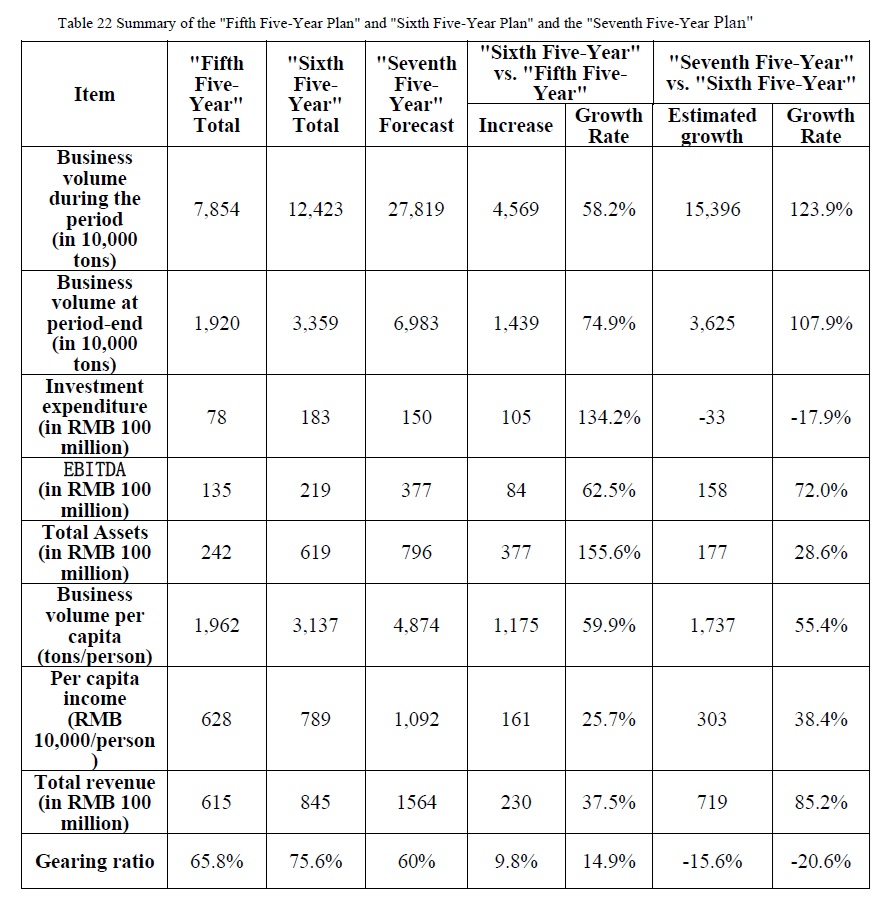
By the end of the "Seventh Five-Year Plan", the Group's business volume is expected to reach 69.83 million tons, an increase of 107.9% compared to the end of the "Sixth Five-Year Plan". During the "Seventh Five-Year Plan" period, the Group's business volume is expected to reach 278.19 million tons, an increase of 123.9% compared to the "Sixth Five-Year Plan" period.
By the end of the "Seventh Five-Year Plan", the total assets of the Group are expected to reach RMB79.6 billion, representing an increase of 28.6% compared to the end of the "Sixth Five-Year Plan".
By the end of the "Seventh Five-Year Plan", the Group's revenue is expected to reach RMB156.4 billion, representing an increase of 85.2% compared to the end of the "Sixth Five-Year Plan".
During the "Seventh Five-Year Plan" period, the Group's EBITDA is expected to reach RMB37.7 billion, representing an increase of 72% compared to the actual amount completed during the "Sixth Five-Year Plan".
By the end of the "Seventh Five-Year Plan", the per capita business volume is expected to reach 4,874 tons, an increase of 55.4% compared to the end of the "Sixth Five-Year Plan"; the per capita income is expected to reach RMB10,920, an increase of 38.4% compared to the end of the "Sixth Five-Year Plan".
During the "Seventh Five-Year Plan" period, the Group's investment expenditure is expected to reach RMB15 billion, a contraction of 17.9% compared to the actual amount completed during the "Sixth Five-Year Plan". The total investment may be adjusted appropriately based on the operating cash flow and the equity financing of the listed company. Investments include various types of investments such as fixed assets, mergers and acquisitions, and equity investments.
During the "Seventh Five-Year Plan" period, the gearing ratio shall be significantly reduced and the total cash reserves shall be increased; by the end of the "Seventh Five-Year Plan", the gearing ratio is expected to decrease to 60%, representing a decrease of 15.6% compared to the end of the "Sixth Five-Year Plan".
Through a combination of industries, businesses, time, and space, we aim to build an outstanding and excellent company that is unaffected by the cycles of any single industry, capable of traversing cycles, and achieving sustainable profitability and continuous growth.
1. Unswervingly advance the realisation of the vision and goal of "a world-leading energy and chemical company — innovation leads the future".
2. Adhere to the principle that "national strategy is Risun's greatest strategy, and the needs of the era are the direction of Risun's progress", and adhere to the Risun ideal of "contributing the greatest strength to social progress".
3. Strive to build Risun into a globally renowned industry + service company, a unique company in the world, a company with long-term, sustainable, healthy, and stable development, and a world-class, outstanding, and excellent company.
4. Continuously update, optimise, improve, and innovate development models, business models, operational models, product and service models, institutional mechanisms, leadership systems, governance models, operation and management models, as well as operation and management methods, tools, and means.
5. Continuously enhance comprehensive, systemic, and essential competitiveness; deeply root in China and, on the basis of a national presence, develop global industrial chains, supply chains, customer chains, value chains, and service chains to form global capital, global talent, global operation and management, a global mindset, a global vision, a global perspective, and a global presence.
6. The growth method and development model have shifted from being investment-driven and market-pulled to being service-led and innovation-driven, and from being cost-efficiency-oriented to quality-effectiveness-oriented.
7. To transition from large-scale manufacturing and cost-efficiency-oriented companies to service-oriented and innovation-oriented companies, and to transform scale manufacturing into service-oriented manufacturing and innovation-oriented manufacturing.
8. The Group's development has evolved from a single manufacturing model with a thin industrial chain and cyclical nature towards a comprehensive, multi-industry, and multi-variety three-dimensional direction across the upstream and downstream, with the front end making up for the shortage of mineral resources and the back end making up for the shortage of differentiated services.
9. The Group's operation and management model has shifted from the original leadership-driven and administrative-order-driven approach towards a direction of employee self-driven, customer-led, service-led, digital-driven, and innovation-driven.
10. Adhere to a creator-oriented approach, encourage management and employees to jointly engage in entrepreneurship, creation, and innovation, transform constraints into incentives, increase the intensity of incentives, respect employees, respect the front line, respect pioneering spirit, respect human nature, and respect democracy, be adept at centralization, and form a Risun-featured culture with combat effectiveness and competitiveness.
11. Regardless of the size of the Company, the volume of its business, or the breadth of its scope, we shall adhere to the two-tier operation and management model, increase investment in digitalization and intelligence, continue to pursue flattening and matrix structures, and create a Risun-featured organisational model with unique competitiveness.
1. In accordance with "Risun's Next Thirty Years" released at the Group's 30th anniversary conference, comprehensively implement the ten-year development outline and the "Seventh Five-Year" Plan in a targeted manner by integrating them with its own business.
2. Continue to adhere to the Group's "Three-Multi" strategy of "multi-mode growth, multi-industry development, and multi-regional layout". However, we will resolutely refrain from diversification. All industries, while independent, will be interrelated, synergistic, mutually supportive, complementary, and integrated.
3. Comprehensively perform product operations, asset operations, and capital operations to form a three-dimensional and integrated development model for the Group, address weaknesses, coordinate and collaborate with each other, enhance profitability, improve return on assets, and cultivate systemic capabilities that span across cycles.
4. Deploy the industrial chain based on the national market, national demand, and national customer layout; deploy the industrial chain based on national essential competitiveness; form a national customer chain, service chain, and supply chain; and promote the in-depth development of the national layout of Risun's business.
5. Deploy the industrial chain based on global markets, global demand, and global customer layout; deploy the industrial chain based on global essential competitiveness; form a global customer chain, service chain, and supply chain; and promote the global expansion of Risun's business into multiple countries.
6. Make every effort to develop the mining, resources, energy, and new energy industries, address weaknesses in the manufacturing sector, allocate resources globally, and enhance the resilience and competitiveness of the industrial chain.
7. Globalisation of resources, globalisation of industries, globalisation of assets, globalisation of capital, globalisation of talents, globalisation of technology, globalisation of R&D, and globalisation of governance models, systems and mechanisms, and operation and management.
8. Continuously consolidate the development philosophy of Risun's products and services being number one in the world, comprehensively enhance the market share and profitability of products and services, and improve supply chain stickiness and stability.
9. Enhance market capitalization and corporate value, comprehensively introduce national and global strategic capital, enhance the influence of Risun, reduce the gearing ratio, increase cash reserves, and strengthen the enterprise's development strength, investment capability, and M&A capability.
10. Based on the standards of service-oriented manufacturing, comprehensively, systematically, and thoroughly transform the Group's business processes, product manufacturing processes, customer service processes, and the series of process systems across sales, transportation, production, supply, and R&D, striving to build Risun into a service-oriented manufacturing enterprise.
11. Continue to increase the proportion of technology products and R&D services in both the profit and development of the Group, and increase investment intensity, particularly by intensifying global technology and R&D mergers and acquisitions, so as to transform large-scale manufacturing into innovation-driven, and transform scale-based manufacturing into innovative manufacturing.
12. It is necessary to both build Risun into a digitalized and intelligent enterprise, and vigorously develop the digital industry. Digitalization and intelligence are not only tools and methods; when combined with various businesses, they can forge the systemic capability to apply logic and discover the essence of better development.
13. Continuously promote transformation in operation and management, transform governance models, systems and mechanisms, operational mechanisms, and operation and management models, and lead the development of the Group. Transform the olive-shaped organisation into a dumbbell-shaped organisation, create a flattened and matrix organisation, and comprehensively enhance organisational efficiency and competitiveness.
14. In accordance with the Group's construction requirements for the "three communities" of "community of interests, community of business, and community of destiny", increase various incentive policies including remuneration, rewards, and shares, etc., transform incentive mechanisms, and continuously enhance the Group's competitiveness.
1. Every industry has its cycles, every product and service will face a surplus, and every company is subject to full competition. Risun must survive through differentiation and develop with individuality amidst such normalcy and common sense, by defining its own positioning, establishing its own direction, choosing its own path, and formulating its own strategies.
2. Whatever you can conceive, others can also conceive; and even what others conceive, you may not necessarily conceive. What you can achieve in terms of cost efficiency, others can also achieve, or even surpass. However, differentiation can be achieved in various aspects such as service, research and development innovation, strategic persistence, firmness of will, as well as the systematic nature and completeness of the value chain, industrial chain, and supply chain.
2. Although they are all companies and are all engaged in entrepreneurship, the organisation, governance model, institutional mechanisms, operational mechanisms, leadership model, business management model, and incentive system of a company can be different and can develop their own characteristics, thereby establishing comprehensive, systematic, and lasting competitiveness.
4. Grasp the different development rhythms of pro-cyclicality and counter-cyclicality. The development of the Company cannot maintain a single pace. There are reasons and possibilities for both pro-cyclical and counter-cyclical development, and it is impossible to unify them into one pace, because economic development and company development are never influenced by a single factor, but rather by multiple factors. The development of the Company can only follow the prevailing trends, grasping the principal contradictions and resolving the key issues within a certain period, thereby achieving rapid development.
5. Grasp seven major balances: balance the development of existing industries (i.e., balance the coking, chemical, new energy, coal, and new materials industries); balance existing industries with new industry investments; balance the allocation of light and heavy assets; balance market-led, investment-driven, and innovation-driven development; balance internal investment and external mergers and acquisitions; balance the coordinated development of the manufacturing and service industries; and balance the national layout and global expansion of Risun's business. This will form a pattern of tiered and sustainable development.
6. Place greater emphasis on uniqueness, differentiated and unique existence, unique value, and being irreplaceable. Place greater emphasis on the stability, sustainability, and continuity of survival and development. We must reduce precariousness and uncertainty, avoiding a situation where our presence is immaterial—adding little and missed by few.
7. Place greater emphasis on efficiency, quality, safety, stability, and sustainability. Do not blindly pursue scale, do not pursue development for the sake of development, and do not pursue investment for the sake of investment. We must resolutely avoid blind investment, speculative investment, and investment based on personal relationships or for the sake of "saving face". The sequence of "specialisation, refinement, strengthening, and expansion" must never be reversed.
8. Benchmark and learn without blindly competing; do not chase trends, follow the crowd, or speculate on hot topics; pursue logical growth and essential growth; grasp trends and laws from a longer-term and more macro perspective; and effectively prevent and control various risks.
9. In joint ventures and cooperation, in addition to normal requirements, greater emphasis shall be placed on the comprehensive conditions of the shareholders' background, and more attention shall be paid to the overall rate of return and shareholder rights of the investee companies; no equity participation shall be undertaken unless specifically necessary.
10. It is necessary to study and utilise policies without being dependent on them, and to study and utilise trends, while also studying underlying laws and focusing more on long-term steady development while capturing short-term changes.
11. Do not lose opportunities due to unfavourable situations or poor market conditions, and do not pursue blind development due to temporary policy adjustments or favourable market conditions. Be cautious when the market is frantic, and be bold when the market panics.
12. Always adhere to seeking truth from facts, and respect economic laws, market laws, and the laws of human nature. Adhere to the principles of acting within one's means and spending within one's income, avoid excessive indebtedness, strictly control the debt ratio, and absolutely ensure the security of cash flows.
13. Establish and improve various risk prevention and control systems, consistently adhere to pre-event prevention, in-event control, and post-event disposal, strictly prevent and control the occurrence of various risk events, and ensure that no systemic risks occur and no major risks arise.
14. Every startup has its own unique DNA and its own unique competitiveness, otherwise it would not be able to survive; however, at the same time, each also has its own boundaries, which include boundaries of cognition, boundaries of capability, and so forth. Any startup has its own limitations; it cannot be omnipotent, it cannot be all-powerful, and it cannot do everything. Risun must always remain clear-headed and consistently survive and develop only within the boundaries that it can control.
15. Despite numerous unfavourable factors in the domestic and international economic environments, and although it is impossible for us to accurately predict the future, Risun always maintains cautious optimism towards the future, always insists on first managing its own affairs well, and always believes that the future is created through hard work and forged through pioneering efforts.
The research, formulation, and implementation of five-year development plans and visionary goals are not only Risun's ability to grasp direction, find its positioning, and plan for itself, but also its ability to build its own survival and development capabilities and to select business models, operational models, and product and service models. Furthermore, they are the prerequisites for Risun to shape its governance model, systems and mechanisms, operational mechanisms, leadership mechanisms, and business management models, representing Risun's most core capability and the distinctive hallmark that distinguishes it from other companies.
The combination of the ten-year development outline and the five-year development plan, the combination of the five-year development plan and the annual plan, and the combination of the annual plan and the monthly and daily plans constitute Risun's "Five Unifications" of strategic management, which represents the combination of long-term and short-term goals in terms of time. Spatially, always having businesses in normal operation, always having businesses for M&A and investment, and always having businesses for research and development constitutes the "Trilogy" of Risun's strategic implementation. This seamless connexion between survival and development, and between time and space—a complete and thorough closed loop without any omissions or blind spots—is the fundamental and essential logic of Risun's survival and development.
This combination of long-term and short-term, long-range and short-range, strategy and tactics, and micro and macro, is not only Risun's methodology, but also reflects Risun's worldview, values, and corporate philosophy. Risun's flexible tactics, enduring strategies, steadfast path, and correct direction ensure a complete and thorough closed loop of time and space for survival and development, which cycles repeatedly and infinitely, forging the logic and essence of Risun’s eternal development.
The entrepreneurship of Risun has always followed the universal laws of startup companies, and more importantly, it aims to shape a Risun with distinctive characteristics. Unique, independent, and self-reliant survival and development have always been our most fundamental pursuit.
Through our continuous endeavours across five-year development plans, we have created Risun, shaped ourselves, and more importantly, created value for our customers, created value for economic development, and contributed our utmost strength to social progress.
China Risun Group Limited
Chairman
May 6, 2026
[1] In Tables 1-7, indicators such as production, total assets, net assets, revenue, gross profit, gross profit margin, net profit, net profit margin, EBITDA, ROA, and ROE are data for China Risun Group Limited (the listed company).
[2]Data scope in Table 20 and Table 22: ① Business volume at period-end, total assets, business volume per capita, income per capita, total income, and debt ratio are the figures as at the end of the "Fifth Five-Year Plan" and the "Sixth Five-Year Plan".② Business volume, investment expenditure and EBITDA for the period are cumulative figures for the period.③ EBITDA, total assets, and debt-to-asset ratio are data under the scope of China Risun Group Limited (the listed company), while other indicators are consolidated data under the system of China Risun Group Limited (the listed company).
