
In 2020, under the dual-carbon strategy and dual energy consumption control policies, China’s coking industry faced continuous tightening of capacity expansion space. Coupled with the ongoing global COVID-19 pandemic and disruptions in international supply chains, the global metallurgical industry chain underwent a new round of layout restructuring. Against this industry backdrop, Nanjing Iron & Steel Group, Delong Group, Risun Group, and Tsingshan Group jointly entered Indonesia Morowali Industrial Park (IMIP) to build the world’s largest-scale coking capacity in industrial history — an unprecedented move that has formed an entirely new global coke industry.
IMIP is a key project under China-Indonesia “the Belt and Road” cooperation, located in Morowali County, Central Sulawesi Province, Indonesia. With a total planned area exceeding 4,000 hectares and cumulative investment surpassing US$34 billion, it has become the world’s longest and most complete stainless steel and carbon steel production base spanning from ore to various industrial products. The park has developed industrial clusters including new energy battery materials, electrolytic aluminum, alloy smelting, coking, and power generation. It currently hosts more than 50 enterprises with over 100,000 employees.
The four independent coking projects – Risun Weishan, Detian Coking, Jinxiang Coking, and Jinrui Coking — represent a total investment of over US$3 billion and occupy 3,350 mu of land. Construction began at the end of 2020, with commencement in operation successively by July 2023. As of May 2026, they have achieved an operating capacity of 12.7 million tons/year of coke, with expected sales of 10.5 million tons in 2026. The products are sold to more than 50 countries and regions, supplying high-quality coke to 83 steel mills and accounting for over 50% of international coke trade volume beyond China and 80% of coke trade volume in India and Southeast Asia, generating an annual output value exceeding US$3.5 billion. The commencement of IMIP’s coking projects has created strong synergies with many other industrial chains within the Park, achieving comprehensive and efficient utilization of various energy resources such as coke, electricity, coke oven gas, and chemical products. Nowadays, the four coking enterprises supply 360,000 cubic meters per hour of clean coke oven gas to 24 enterprises in the Park, reducing carbon emissions by 50% compared to traditional energy sources. While providing strong clean energy support, they also directly and indirectly enable green and low-carbon production processes, significantly enhancing the global market competitiveness of various products.
Approximately one-third of the coal raw materials used in IMIP’s coking projects come from Indonesia locally. By processing coal priced at over US$100 per ton into coke priced at over US$300 per ton and chemical products priced at over US$500 per ton, these projects have directly improved Indonesia’s overall level of industrialization and provided employment for nearly 5,000 Indonesians.
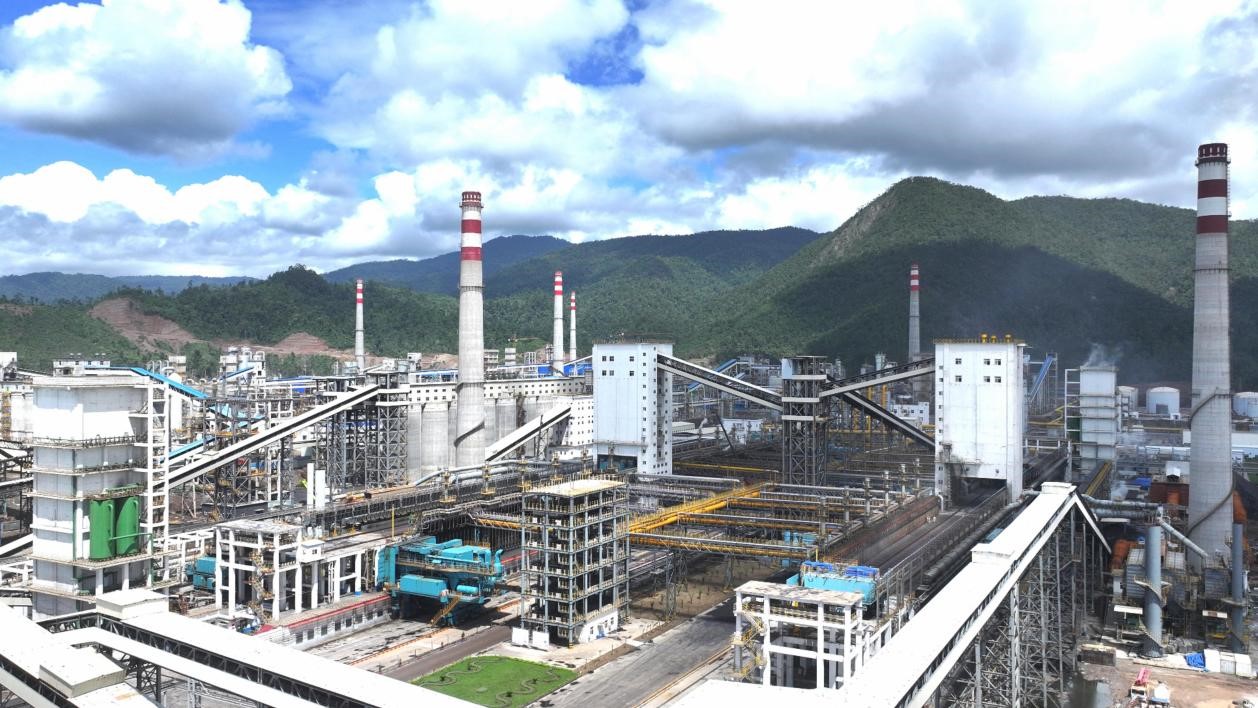
As the projects have been progressively completed and commenced in operation, a global procurement network of coal as raw materials has been established. In each year, 22.0 million tons of washed coking coal are procured from 11 countries, 50 mines, and more than 80 types of coal, accounting for nearly 10% of international seaborne trade volume of coking coal beyond China. Through mechanisms such as long-term agreements for price locking and futures-spot combinations, the traditional pricing model has been broken, effectively controlling fluctuations of cost of raw materials.
IMIP Port has an annual throughput capacity of 150 million tons. The 15.6 million tons of coke and 22.0 million tons of coal are supported by five 100,000-ton dedicated berths. Each coking enterprise follows a “mountain-back, sea-front, port-factory” layout, maximizing coal and coke logistics efficiency to the best — improving turnover efficiency by 70% when compared to the traditional sea transport together with road transport model.
With the successive commencement of coking capacity in Indonesia, China’s coke exports have decreased from 7.5 million tons to 4.5 million tons, Japan has announced the closure of 3.5 million tons of coke ovens with exports dropping from 1 million tons to less than 100,000 tons, and Colombia’s coke exports have fallen from 4 million tons to less than 3 million tons. At the same time, profound changes have occurred in international coke pricing. Indonesian coke prices have become one of the main benchmarks in the international coke market. Through superior quality and professional service, Indonesian coke has achieved product premiums — shifting from being US$20/ton lower than Chinese export prices in 2023 to US$15/ton higher in 2026.
The successive commencement of IMIP’s 15.6 million tons coke capacity marks a historic turning point in the global coke industry landscape. The project has not only reshaped trade flows and directly changed the global supply-demand geographical map, but has also, through its integrated cost and logistics advantages, forced steel-producing regions in ASEAN, Japan, India, Europe, and South America to adjust their domestic coking industry strategies. Thus, amid the wave of global industrial chain restructuring, Indonesian coke has completely rewritten the competition rules and development path of the global coke industry through a new paradigm of scale, intensification, high efficiency, strong synergy, and global resource allocation, heralding the beginning of a new era.
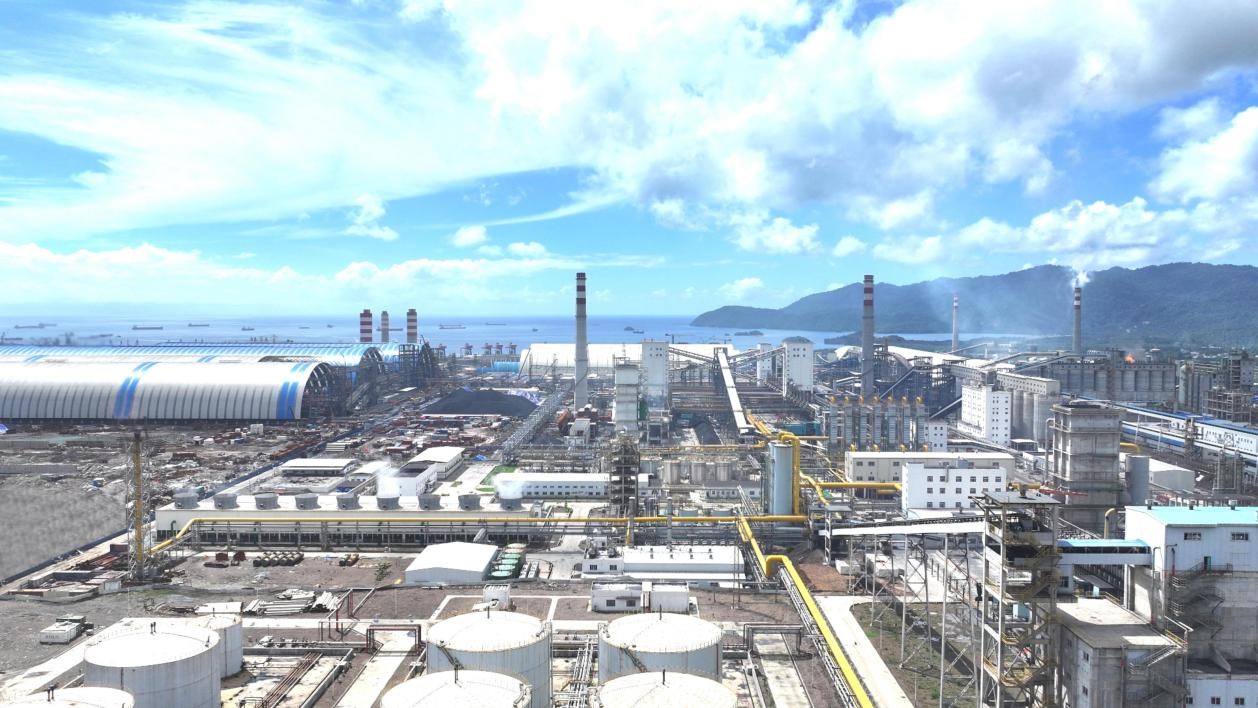
Risun Group owns six coke and coking parks in China. Together with the Risun Weishan Coking Park in Indonesia, its total capacity reaches 20.0 million tons. With an additional 4.9 million tons under operation management, its overall coke business capacity has reached 24.9 million tons, promoting Risun Group as the largest coke producer and supplier in China and the world. At the same time, Risun Group operates three chemical parks, and four of its seven coke and coking parks simultaneously develop chemical industries. Through the coupled development of coal chemical and petrochemical industries, Risun Group has realized a unique integrated development model of “coke + coal chemicals + petrochemicals”. Relying on an integrated operation and management system covering “sales-transportation-production-supply-research”, Risun Group has formulated a unique industrial survival and development model unparalleled in the world.
